



What is a Backup Storage Device?

AI Overview:
Backup storage devices are essential tools for protecting business data from loss, downtime, and security threats. This blog explains what backup storage devices are, their key features—such as capacity, speed, security, and compatibility—and compares common options like external drives, NAS, cloud backups, and tape storage. It also outlines best practices for backups, troubleshooting common issues, and future trends in data management. Overall, the article helps businesses choose reliable backup solutions to ensure data security, operational continuity, and long-term scalability.
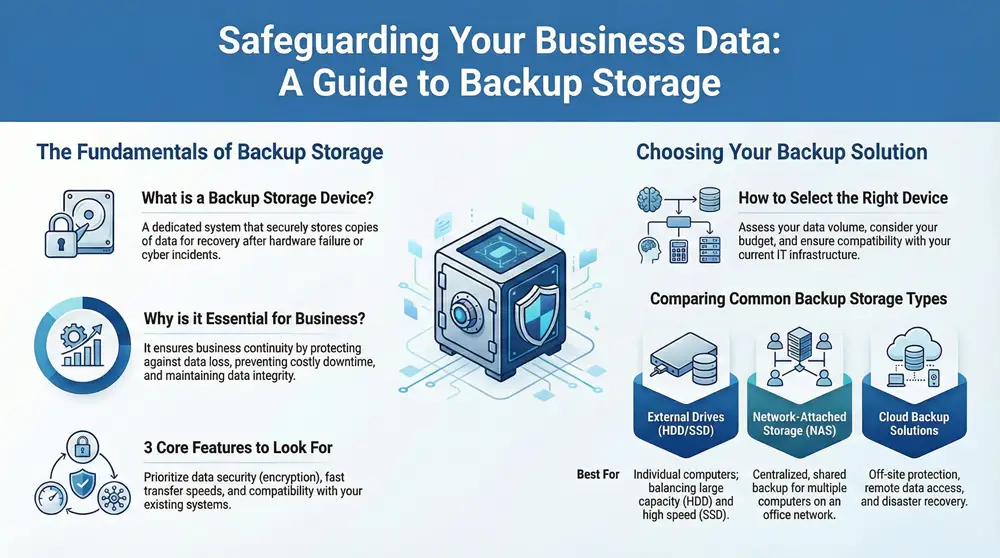
Understanding Backup Storage Devices: Definition and Key Features
Do backup storage devices protect data from unexpected losses? This article explains what backup storage devices are and examines their important attributes. It covers key features and best practices while offering tips on troubleshooting common issues. Business owners will learn how to select the right device to support secure data management and prevent costly downtime.
Key Takeaways
- 1800 office solutions has 40 years of experience in office equipment leasing and repair
- the company leases all-in-one printers, scanners, copiers, and fax machines
- they provide reliable repair services for copiers and printers
- their extensive background supports efficient managed office solutions
Defining Backup Storage Devices

Backup storage devices serve as crucial tools in data management, ensuring scalability and accessibility for every client. These devices perform key functions related to data security, offering various options such as memory card and optical storage solutions while leveraging advanced technology to maintain data integrity.
Understanding What Backup Storage Devices Are
Backup storage devices are engineered to simplify data management, offering a plug and play setup that suits modern office environments, including those running windows 10. They support various file systems such as exfat, ensuring compatibility with contemporary devices and storage standards.
Industry leaders like lacie provide robust solutions that integrate easily with systems such as raid configurations, making it a practical choice for businesses seeking reliable data protection. These devices combine ease of use with professional features that meet the demands of today’s digital workflows.
The Importance of Backup Storage Devices in Data Management
Backup storage devices play a critical role in managing data for modern offices, offering quick speeds and versatile support across systems such as android and hard disk drive setups. The value of these devices lies in their ability to work with various media, including optical disc options, ensuring smooth and secure data handling:
Efficient data management is crucial for operational continuity, and these devices offer practical benefits that resolve common challenges in data safeguarding. Their proven reliability and consistent performance make them a dependable option for businesses facing demanding workloads.
Key Functions of Backup Storage Devices
Backup storage devices offer vital functions that facilitate data recovery in real-time, ensuring that critical files remain protected and accessible. They provide a user-friendly menu for managing storage options and configurations, making it easy to initiate processes such as pc cloud backup and backups to my passport external drives.
These devices integrate with popular brands like lexar, which underscores their reliability and professional-grade features. This integration enables consistent performance when organizing and retrieving large volumes of data, addressing the urgent need for secure data management solutions in businesses.
Common Types of Backup Storage Devices
Backup storage devices come in various formats that cater to diverse business needs and operational environments. Some devices offer impressive density, making them suitable for use in a data center where space efficiency and performance remain a priority, and a robust warranty is often provided to ensure reliability under sustained usage.
Companies also integrate solutions with options like the best cloud backup for pc to enhance data safety, while industry benchmarks confirm their performance and ease of management. Practical choices in backup storage enable decision makers to address storage limitations effectively and maintain a secure, scalable IT infrastructure.
Key Features of Backup Storage Devices

Key topics include storage capacity considerations, transfer speeds, connectivity options, and added functionalities. The section discusses portable storage devices from seagate technology, practical data backup strategies such as microsoft azure integration, and tape solutions. These points offer practical insight into performance and versatility in backup storage solutions.
Storage Capacity Considerations
Backup storage devices must offer ample capacity to handle extensive data demands in environments ranging from server rooms to offices with mac systems. An ac adapter ensures steady power support while password protection upholds security for sensitive information, aligning capacity with a practical start menu for task accessibility:
Organizations recognize that sufficient storage capacity directly influences operational efficiency and data retrieval speed. The integration with tools like the start menu facilitates a smoother workflow, while reliable server support and mac compatibility simplify everyday tasks and address critical storage needs.
Transfer Speeds and Performance Metrics
Transfer speeds in backup storage devices directly impact efficiency, allowing a consumer to swiftly move data across various systems. The industry has seen significant improvements, with gigabyte-level performance ensuring that nas backup and other setups operate without delay in transferring files.
Devices designed as backup storage devices consistently deliver reliable performance metrics, addressing common challenges faced by businesses and individual users. Practical performance tracking is available for those monitoring transfer speeds, ensuring that every backup maintains integrity and speed in intense digital environments.
Connectivity Options Available
The connectivity options in backup storage devices are designed to support various external configurations, providing options such as cloud backup for mac integration and compatibility with flash memory interfaces. Business owners benefit from secure and reliable connectivity that leverages active cache systems to ensure efficient data management.
These devices offer dependable durability through ports that support compact disc inputs, enabling seamless data transfers and robust performance under demanding conditions. The connectivity features help maintain a stable link between servers and personal computing systems while addressing common challenges in data management environments.
Additional Functionalities
Backup storage devices incorporate data deduplication techniques that optimize file management on systems such as windows 11. Feedback from industry professionals indicates that high-speed connectivity like thunderbolt significantly reduces transfer delays while maintaining reliable performance.
These devices further support advanced archiving solutions through tape library integration, providing a secure approach to long-term data storage. Industry experts note that this additional functionality, combined with user feedback, addresses common business challenges related to data integrity and efficient resource management.
Comparing Backup Storage Device Types

This section reviews external hard drives versus solid state drives, network-attached storage devices, cloud backup solutions, and magnetic tape drives. It covers redundancy aspects, interface performance, storage options featuring Sandisk reliability, Amazon Web Services integration, and capacity measured in bytes, providing practical insights into each backup type.
External Hard Drives Versus Solid State Drives
External hard drives deliver substantial storage capacity for backup storage devices, allowing a user to store essential information, including camera files and documents securely. Western Digital models, known for their robust performance, support efficient data retrieval, making them suitable for routine backups like a time machine setup:
- Generous storage capacity
- Reliable performance for camera and document backups
- Consistent data integrity for everyday use
Solid state drives provide faster data transfer speeds compared to external hard drives, ensuring immediate access to critical information. These drives serve users who need rapid updates for backups, offering performance advantages in setups that mimic a time machine environment while supplementing solutions from brands like Western Digital.
Network-Attached Storage (NAS) Devices
Network-Attached Storage devices offer streamlined backup solutions for a computer appliance environment, providing seamless integration with object storage systems and nas cloud backup to address data management challenges. They support efficient data transfer to tapes while ensuring compatibility with various computer configurations.
This type of storage device delivers reliable performance for organizations seeking secure data handling and easy scalability. The integration with nas cloud backup and computer appliance frameworks highlights its practical use in modern office setups, offering a straightforward approach to managing and preserving critical data.
Cloud Backup Solutions
Cloud backup solutions provide a reliable option for businesses to secure essential information by combining robust cloud storage with effective file sharing capabilities. Their integration with platforms like ios streamlines operations while minimizing failure risks and mitigating data loss issues.
Industry experts assert the necessity of these systems for preserving critical datasets, especially when traditional backup methods fall short:
- Seamless file sharing across devices
- Efficient cloud storage management
- Enhanced protection against system failure and data loss
These solutions deliver practical support to meet modern office demands.
Magnetic Tape Drives
Magnetic tape drives offer a reliable option for data storage, with performance optimized for backup and restore processes. They work effectively with a wide range of file system configurations and serve as an integral part of external storage solutions for business data management.
This technology pairs seamlessly with advanced software systems to ensure secure and efficient backup and restore operations. The practical design of magnetic tape drives supports routine data storage tasks, making them valuable for organizations aiming to protect critical information without overcomplicating infrastructure needs.
Choosing the Right Backup Storage Device

This section outlines important criteria, including assessing backup needs, budget considerations, compatibility with existing systems, and evaluating reliability and longevity. The content guides a pro on choosing the right solution for a laptop, effective backup strategies, cloud backup options, and compatibility with windows systems.
Assessing Your Backup Needs
Evaluating backup needs requires a focused approach that considers data volume and system compatibility. Experts advise utilizing a reliable usb interface and proven backup software to streamline the backup process, while nas backup solutions offer scalable options that address growing storage requirements.
Organizations benefit from a precise backup strategy that minimizes disruption and improves workflow efficiency. Incorporating a shortcut for repetitive tasks and exploring cloud backup android capabilities provide practical solutions for managing data across various systems and environments.
Budget Considerations
Businesses seeking a reliable solution for backup storage devices must consider the price and accessibility of the hardware before making an investment. Experts recommend exploring options like sandisk professional models in sata formats to ensure the device not only meets storage demands but also serves as the best photo storage device for evolving needs.
Evaluating cost-effectiveness and compatibility is essential for organizations managing large volumes of data. Professionals advise that comparing price points across different devices, including those with sandisk professional branding and sata connectivity, can offer valuable insights into operational efficiency and long-term affordability.
Compatibility With Existing Systems
Compatibility with existing systems is critical when selecting a backup storage device, particularly for businesses that must operate within a specified budget. Integrating devices with existing dvd-based archive systems and fibre channel networks ensures seamless data migration while minimizing vulnerabilities to ransomware attacks.
Ensuring that new backup storage solutions can connect with a company’s current setup enhances overall efficiency and protects vital information. This approach allows organizations to maintain a robust archive, align with budget considerations, and secure systems against potential ransomware threats.
Evaluating Reliability and Longevity
When assessing the reliability and longevity of backup storage devices, experts emphasize the importance of verifying compatibility with various protocols such as USB4 and ensuring a stable connection that supports file explorer management on macos systems. The device’s integration with cloud platforms also provides a robust safety net, allowing data to be readily accessible via the internet for long-term preservation.
Evaluating these devices involves testing their performance under continuous operation and confirming that they meet enterprise-grade quality standards. This practical approach ensures that storage solutions remain effective over time, securing vital files through modern interfaces like usb4 while maintaining clear accessibility on macos and extended cloud support through the internet.
Best Practices for Using Backup Storage Devices
Effective online pc backup practices include regular schedules, robust encryption, systematic testing, and organized data management. Professionals prioritize tool integration with desktop computer systems, ensuring that every bit of data is protected. Emphasizing storage area network compatibility and cost efficiency, these strategies support reliable backup protocols while maintaining operational clarity for businesses.
Regular Backup Schedules
Maintaining a regular backup schedule is a key practice for minimizing the risk of data loss and ensuring optimal speed of recovery during system failures. Industry experts advocate aligning backup frequency with antivirus software updates and hardware encryption protocols to safeguard file integrity and keep pace with fast data environments.
Consistent backups help mitigate the risk of disruptions by preserving vital information through scheduled intervals that support high-speed recovery. Professionals recommend integrating regular backup routines with hardware encryption measures and reliable antivirus software to secure data and maintain operational efficiency.
Data Encryption and Security Measures
The use of data encryption and security measures is vital for businesses that rely on backup storage devices to protect sensitive information. Implementing strong encryption protocols helps guard against unauthorized access while supporting regulatory compliance and maintaining data integrity.
Organizations benefit from practical security practices by integrating encryption tools into their backup processes. This approach ensures that backup data remains secure during transfers and storage, reducing vulnerability to cyber threats and enhancing overall system reliability.
Testing and Verifying Backups
The process of testing and verifying backups is critical to ensure data integrity and quick recovery in case of system failures. Regular tests using various file types and system configurations confirm that backup storage devices are performing as expected and data can be restored without issues:
Industry professionals recommend a comprehensive testing routine to avoid the risk of incomplete backups and data loss during critical operations. Consistent verification processes, including routine runs and system integration assessments, provide clear insights into the health of backup storage devices and facilitate necessary adjustments for optimal performance.
Organizing and Managing Backup Data
Organizations optimize data handling by implementing clear directory structures and systematic naming conventions that simplify ongoing backup processes. This practice improves retrieval times and ensures that backup storage devices function efficiently for everyday business operations.
Industry experts recommend regular audits of stored data to remove redundant files and verify the integrity of backups maintained on office equipment like printers and scanners. This approach enables companies to manage backup data confidently and respond promptly to unexpected system changes.
Troubleshooting Common Issues
This section addresses common issues encountered with backup storage devices. It outlines steps for recognizing signs of drive failure, resolving connectivity problems, managing storage space efficiently, and selecting appropriate data recovery options. Each topic presents practical insights aimed at helping businesses maintain secure and efficient data management practices.
Recognizing Signs of Drive Failure
Signs of drive failure may include unusual noises and unexpected slowdown during data transfer operations, alerting business owners to potential issues with backup storage devices. Early detection of these indicators allows for prompt intervention and replacement of the affected component to prevent data loss.
Monitoring drive performance through regular diagnostic checks helps identify symptoms such as file access errors and prolonged system response. Implementing a routine inspection regimen ensures that any irregularities in backup storage devices are addressed swiftly, maintaining consistent operation and security.
Resolving Connectivity Problems
Businesses often face challenges when backup storage devices experience connectivity issues, which can disrupt data management routines. Experts advise checking cable integrity and port configurations to ensure stable connections between devices and computers. This proactive approach helps mitigate downtime and secures vital data transfers.
Technical support professionals recommend carrying out firmware updates and interface diagnostics to resolve connectivity problems. Such measures contribute to consistent performance and prevent future disruptions, allowing business owners to maintain reliable data protection while staying connected. This practical solution approach offers a clear pathway for maintaining system integrity during high-demand periods.
Managing Storage Space Efficiently
Managing storage space efficiently involves monitoring file volume and removing redundant data to maintain optimal performance. Business owners can optimize backup storage solutions by employing management tools that automate clean-up tasks and flag unused files:
- Review file usage regularly
- Automate deletion of duplicates
- Schedule routine clean-ups
Regular checks and maintenance ensure that valuable storage capacity is reserved for critical business data. Experts advise integrating practical software tools that allow for continuous space management and alert administrators when gaps in storage utilization occur.
Data Recovery Options
Data recovery options offer vital methods for restoring important files when backup storage devices encounter issues. A structured approach enables professionals to choose recovery methods that suit particular hardware setups and data types, ensuring minimal operational disruption and quick restoration:
Expert technical support teams emphasize the importance of implementing regular recovery tests to verify backup integrity. Proactive recovery solutions guarantee that each process is streamlined, delivering effective protection against data loss and maintaining the overall reliability of an organization’s IT infrastructure.
The Future of Backup Storage Solutions
Emerging technologies in backup storage offer new possibilities for secure data management. Trends in data management signal shifts toward efficient, scalable solutions. Cloud computing continues to redefine backup solutions, ensuring quick file access and robust data protection. The following sections provide practical insights into these evolving areas and their impact on data management strategies.
Emerging Technologies in Backup Storage
Modern data management solutions are advancing with emerging technologies that streamline backup storage systems. Experts highlight innovations in cloud integration and encryption techniques that simplify data recovery and improve overall system performance. These developments offer a practical alternative for organizations seeking enhanced security and scalability in their backup storage strategies.
Industry leaders note that backup storage devices are incorporating smarter software to detect and resolve issues swiftly. This approach provides actionable insights and real-time monitoring that tailor solutions to varying business needs. The focus on technological evolution in backup storage emphasizes increased reliability and efficiency in safeguarding critical data.
Trends to Watch in Data Management
The industry observes significant progress in data management, marked by advancing integration between cloud-based archives and traditional backup storage devices. The transition toward scalable backup solutions enhances system performance, enabling organizations to manage data efficiently and protect against unforeseen system interruptions.
Experts note that recent trends in data management drive improved encryption and connectivity, offering business owners practical tools for secure storage. This approach provides a reliable framework for handling large data volumes while keeping backup procedures streamlined and user-friendly.
Impact of Cloud Computing on Backup Solutions
Cloud computing has transformed backup solutions, allowing businesses to access secure and scalable backup storage devices with minimal downtime. This advancement streamlines data management processes and offers flexible recovery options should issues arise, prompting organizations to reassess their data protection strategies:
- Scalable cloud integration
- Rapid data retrieval
- Secure backup environments
Modern offices benefit from cloud computing through improved connectivity, robust encryption, and seamless file sharing that addresses daily business demands. This integration not only simplifies backup management but also ensures that crucial data remains accessible during system updates and unforeseen events.
Frequently Asked Questions
What defines backup storage devices?
Backup storage devices are systems that securely store copies of data for recovery during hardware failure or cyber incidents. They include external drives, cloud storage, and network-attached devices, ensuring business continuity and minimal downtime.
Which features are crucial in backup storage?
Key backup storage features include reliability, scalability, data encryption, and quick recovery. A business-ready solution combines secure networks, user-friendly management, and integration with managed cybersecurity and IT services, ensuring critical information remains accessible and protected.
How do different backup devices compare?
Backup devices differ in performance; tape drives offer longevity for archiving, traditional hard disks deliver capacity and speed, while cloud systems ensure off-site protection and remote access. Business owners must assess their data handling needs when selecting a device.
What factors matter when choosing backup storage?
Backup storage selection depends on capacity, transfer speed, security measures, and compatibility with managed IT services. This ensures smooth data recovery while complementing office equipment strategies for businesses seeking reliable cybersecurity solutions.
How can common issues with backup storage be resolved?
Resolving backup storage issues involves verifying system configurations, updating firmware, and scheduling regular testing. Managed IT services inspect and repair potential faults, ensuring data integrity for reliable operations and secure cybersecurity measures.
Conclusion
Understanding backup storage devices is vital for maintaining data integrity and ensuring smooth operational workflows. They offer robust security measures, rapid data transfer, and reliable connectivity options suitable for various office environments. Businesses must assess capacity, compatibility, and performance metrics to select devices that best fit their needs. This knowledge empowers organizations to protect sensitive information and support continuous, efficient IT operations.